

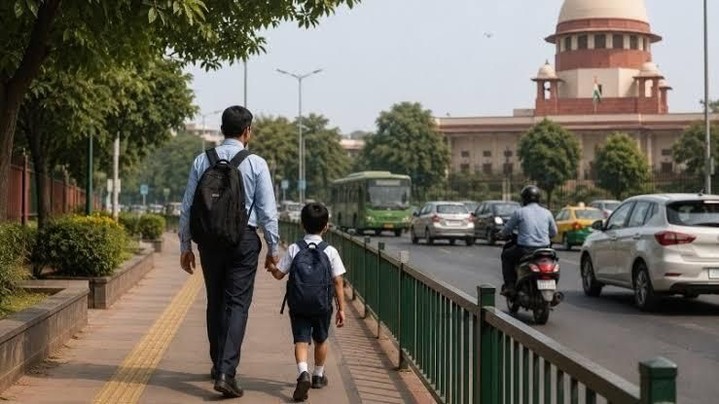
The Supreme Court has highlighted that the right to walk safely is a basic right of every citizen. The court said that pedestrians deserve safe and accessible public spaces. However, experts believe that achieving this goal will require much more than building new footpaths.
In many Indian cities, footpaths are damaged, blocked by illegal encroachments, or occupied by parked vehicles. As a result, people are often forced to walk on busy roads, increasing the risk of accidents. This problem affects children, senior citizens, and people with disabilities the most.
Urban planning experts say cities should focus on creating pedestrian-friendly infrastructure. This includes wide and well-maintained sidewalks, safe zebra crossings, traffic signals, proper street lighting, and speed control measures. Authorities also need to remove encroachments and ensure regular maintenance of public walkways.
Experts add that city planning should balance the needs of pedestrians, cyclists, and motorists instead of giving priority only to vehicles. Better public transport and safer streets can also encourage more people to walk.
The Supreme Court’s observation is a reminder that safe mobility is an important part of daily life. Building walkable cities will require better planning, strict enforcement of traffic rules, and long-term investment in public infrastructure. Only then can the right to walk become a reality for every citizen.