

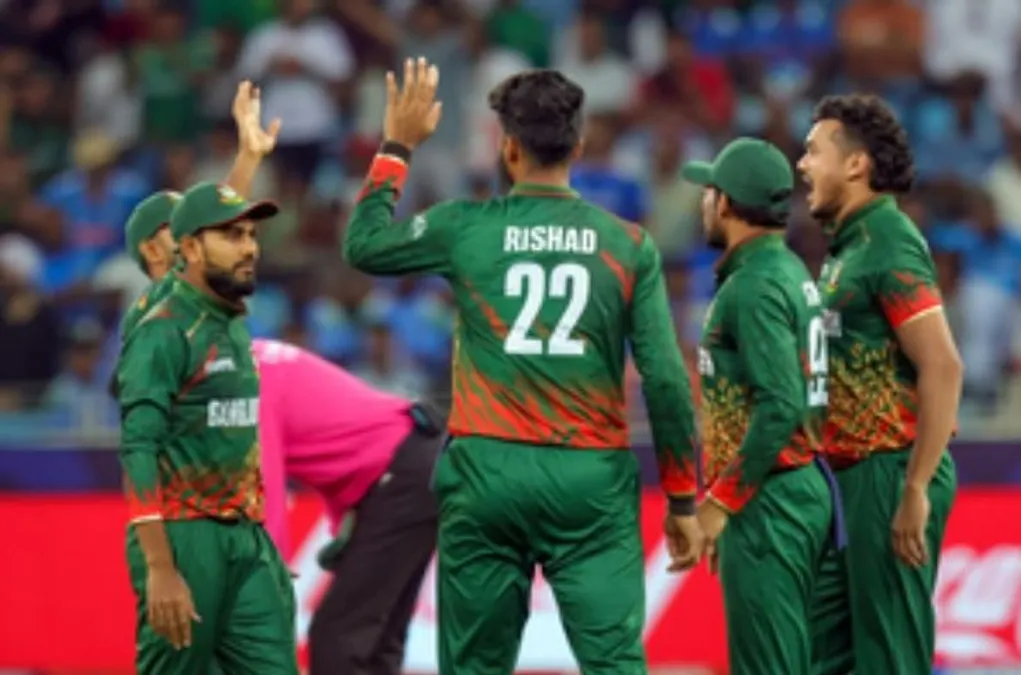
New Delhi: Former Pakistan spinner Danish Kaneria has strongly backed the International Cricket Council’s (ICC) decision to stick to the original schedule of the 2026 ICC Men’s T20 World Cup, amid Bangladesh Cricket Board’s (BCB) decision not to travel to India for the tournament.
Bangladesh recently informed the ICC that it would not play its World Cup matches in India, citing security concerns amid strained diplomatic relations between the two countries, and requested that its fixtures be shifted to Sri Lanka. However, the ICC reiterated that the tournament will proceed as planned, with Bangladesh’s matches scheduled in India.
Reacting to the developments, Kaneria said that if Bangladesh chooses to opt out of the tournament, it would not significantly impact the competition. “If Bangladesh feels they don’t want to play, then don’t play. It won’t make much difference anyway; it’s not like they were going to finish in the top four,” he remarked.
The former spinner also referred to the recent decision by Kolkata Knight Riders to release Bangladeshi pacer Mustafizur Rahman ahead of IPL 2026 amid political tensions. Kaneria said the move was taken considering public sentiment and humanitarian concerns, and not due to pressure from cricketing bodies.
“The BCCI or the ICC never asked Bangladesh not to come to India. They welcomed them. All teams under the ICC umbrella are provided foolproof security,” Kaneria said, adding that the global cricket body followed a transparent process.
He pointed out that during the ICC meeting attended by all member boards, the majority supported the decision to retain the original World Cup plan. “Every board was present — England, Australia, West Indies — and when voting took place, everyone supported the ICC proposal. Only Bangladesh and Pakistan voted against it,” he said.
Kaneria also expressed concern over the internal situation in Bangladesh that preceded the standoff, calling the reported incidents “deeply disturbing” and stressing that violence goes against the values of humanity and religion.
Warning of long-term consequences, Kaneria said Bangladesh’s rigid stance could hurt its cricketing future. “If they believe whatever they say must be accepted by the ICC, that won’t work. In the long run, India not playing against Bangladesh will be a big loss for them,” he stated.
Backing the ICC’s firm approach, Kaneria underlined that large-scale tournaments cannot be altered at the last moment. “You can’t change mega events overnight. The entire structure — schedules, logistics, team travel — would collapse,” he said.
Dismissing reports that Pakistan might also refuse to travel, Kaneria said the ICC has alternatives ready. “The country that backs out suffers the loss. There are penalties. If Bangladesh doesn’t go, Scotland can come in. Namibia is also playing very good cricket. The ICC and BCCI won’t be affected,” he added.
Kaneria further noted that Bangladesh’s participation could have opened doors for its players in leagues like the IPL. “If they had come to India for the World Cup, barriers for Bangladeshi players in the IPL could have eased, and more players might have featured in the league,” he said.
Lamenting the growing politicisation of cricket, Kaneria said the focus has shifted away from the sport itself. “Earlier, people discussed wickets, bowling and techniques. Now it’s all politics. Technical cricket doesn’t sell anymore — comparisons do,” he observed.
Calling for restraint, he urged stakeholders to protect the spirit of the game. “Cricket must be kept separate from politics. For the future generation, the sport needs to be protected and promoted,” Kaneria said, adding that decisions should always be taken with a long-term vision in mind.