

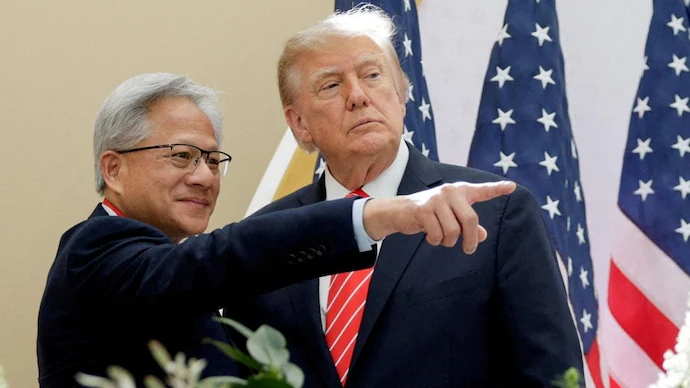
The controversy surrounding Nvidia CEO Jensen Huang could give Washington an opportunity to tighten restrictions on the company’s business with China, according to Taiwanese semiconductor analyst Andrew Lu.
Huang has long opposed strict US export restrictions on advanced AI chips to China, arguing that such measures would benefit Chinese competitors like Huawei. However, recent allegations involving a Chinese businesswoman suspected of having links to Beijing’s intelligence network could weaken his influence in Washington.
Lu believes the controversy could help the US pursue three objectives: reduce Huang’s lobbying influence, reconsider approvals for Nvidia’s H200 chip exports to China, and increase government scrutiny of the company’s operations.
The allegations have also attracted congressional attention. Republican leaders of three US House committees have sought a closed-door briefing from Huang on November 18 to discuss possible security concerns.
In the meantime, an independent inquiry has been started by Nvidia’s board. The company has maintained that there is no evidence that national security information or trade secrets were compromised.
China has rejected the espionage allegations.
Although no direct evidence has established that Huang shared sensitive information, the controversy could intensify scrutiny of Nvidia’s China operations and complicate its position in the US-China technology rivalry.