

Early Life and Educational Background
Braj Mohan Ram was born on 1 January 1958 in Chandwa, which was part of Palamu district in Bihar at the time. His parents were Arjun Ram Baitha and Chaiti Devi. Following the creation of Jharkhand in November 2000, Chandwa became part of Latehar district in the new state.
Ram pursued his studies at B.S. College in Lohardaga and obtained a Bachelor of Arts degree. Before and during his political career, he was identified professionally as an agriculturist. He is married to Leela Devi, and they have three sons.
From State Politics to Parliament
Ram entered politics in Bihar and became associated with the Bharatiya Janata Party (BJP). His first major legislative role came when he represented the Latehar constituency in the Bihar Legislative Assembly from 1991 to 1995. He was also associated with the Assembly’s committee dealing with the welfare of Scheduled Castes and Scheduled Tribes.
In 1996, Ram entered national politics after winning the Lok Sabha election from Palamu. He secured re-election in 1998 and 1999, representing the constituency in the 11th, 12th and 13th Lok Sabhas.
During his years in Parliament, Ram served on committees dealing with home affairs, energy, transport and tourism, and the welfare of Scheduled Castes and Scheduled Tribes. He also participated in consultative committees linked to the ministries of Coal, Railways, and Steel and Mines. These assignments gave him exposure to several areas of parliamentary work and public administration.
Apart from his legislative responsibilities, Ram held organisational positions within the BJP’s Scheduled Caste wing. Between 1996 and 1998, he served as president of the Vananchal Pradesh Scheduled Caste Morcha in Ranchi. His tenure in the Lok Sabha ended in 2004.
Appointment and Political Controversy
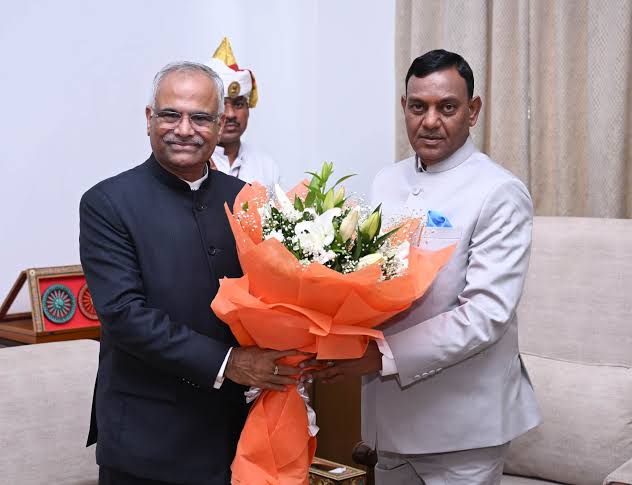
President Droupadi Murmu announced Ram’s appointment as Odisha Governor on 12 October 2026. He formally assumed the position six days later.
Soon after the announcement, his reported comments about expanding the BJP’s Scheduled Caste Morcha in Odisha and increasing support for the party sparked political criticism. The Biju Janata Dal (BJD) questioned whether the remarks were consistent with the neutrality expected of a governor. Congress leaders also raised concerns about the expression of partisan political goals by someone appointed to a constitutional office.
A New Constitutional Responsibility
Ram’s political career spans grassroots electoral politics, legislative service and parliamentary responsibilities. As Governor of Odisha, his role differs from that of an elected representative, requiring him to uphold constitutional principles and remain impartial in the discharge of his duties. His performance in this office will be an important part of his public life beyond his years in electoral politics.