

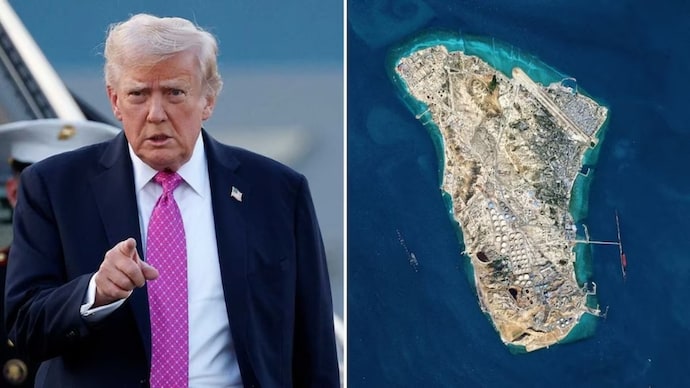
Former US President Donald Trump has issued a fresh warning to Iran amid rising tensions in the Middle East. In a post on Truth Social, Trump claimed that Iran’s military power has already been heavily damaged and said the United States could launch major strikes against the country.
Trump stated that Iran’s navy, air force, radar systems, and air defenses have been weakened. He warned that the US would hit Iran “very hard” if the situation continues to escalate.
The former president also made headlines by suggesting that the US could one day take control of Iran’s major oil and gas facilities. He specifically mentioned Kharg Island, a key hub for Iran’s oil exports. According to Trump, controlling such infrastructure would be similar to the US approach toward Venezuela’s oil sector.
Kharg Island plays a crucial role in Iran’s economy. The island handles most of the country’s crude oil exports. Millions of barrels of oil leave the island every day, with a large share being shipped to China.
Meanwhile, military tensions remain high across the region. Reports indicate that US forces carried out strikes on Iranian surveillance systems, communication networks, and air defense sites. Washington said the attacks were a response to continued Iranian actions.
Iran quickly responded. The Islamic Revolutionary Guard Corps claimed responsibility for attacks on several US military facilities in the Gulf region. Targets reportedly included bases in Kuwait, Bahrain, and Jordan.
Despite the exchange of attacks, diplomatic efforts are still underway. Trump said that communication between Washington and Tehran continues as both sides discuss a possible agreement.
However, major differences remain. One of the key issues involves billions of dollars in Iranian funds that are frozen in foreign banks. Iran wants access to the money, while the US prefers a gradual release tied to humanitarian purposes.
Sources involved in the talks believe both countries are looking for a way to reduce tensions. While negotiations continue, the situation remains fragile, and the risk of further conflict has not disappeared.