

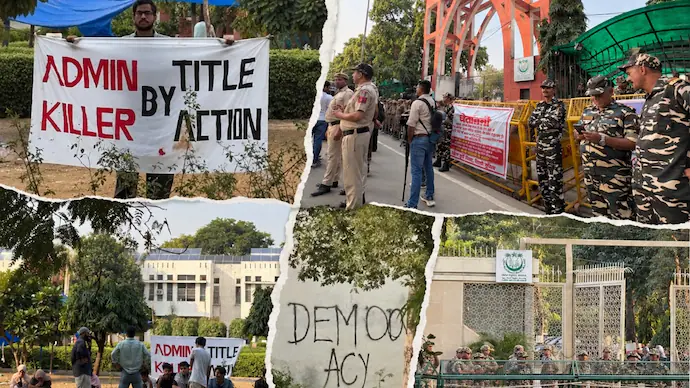
Protests at Jamia Millia Islamia have intensified as students continue demanding student union elections and the release of detained protesters. The university has not held union elections since 2006, making student representation the central issue behind the ongoing agitation.
The protest began on October 11 and has involved hunger strikes, demonstrations and clashes over an agreement with the administration. Students have demanded an official notification confirming the election process and a clear deadline for holding polls.
Protesters have also raised concerns about shortages of food, water, medicines and other essential supplies. Meanwhile, police deployment and restrictions around the campus have added to tensions.
The university administration has defended its response, stating that senior teachers met students to discuss their demands. However, disagreements over the proposed settlement have prevented a lasting resolution.
Jamia has extended online classes until November 24 and shifted odd-semester examinations online. The decision has raised concerns among students enrolled in practical-based courses.
Protesters have drawn inspiration from student movements at Aligarh Muslim University and Jawaharlal Nehru University, where student unions play an important role in campus representation.
With academic activities disrupted and negotiations unresolved, students continue to press for elections and greater representation in university affairs.