

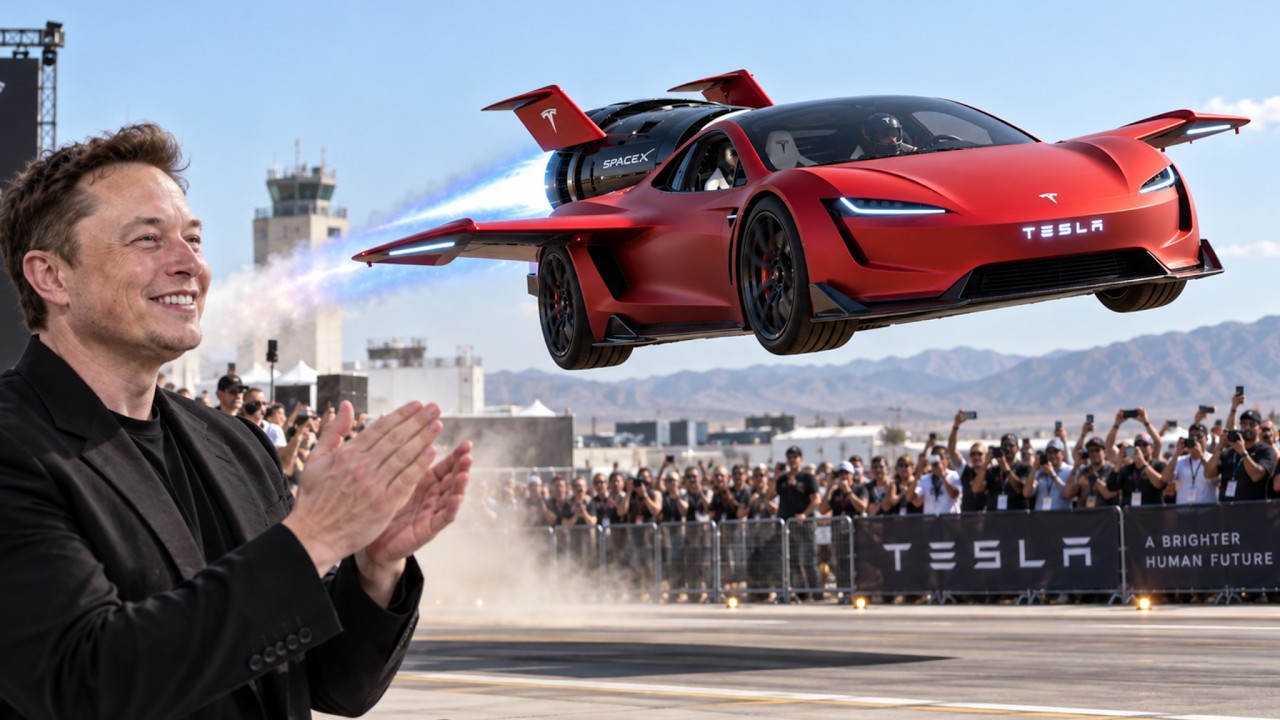
The system reportedly uses compressed gas stored in high-pressure tanks. When released through specially positioned nozzles, the gas generates thrust in the opposite direction, following Newton’s third law of motion.
Unlike conventional rocket engines, these cold-gas thrusters do not burn fuel. Instead, they use the energy stored in pressurised gas to produce force.
How does the car lift off?
The upward thrust must exceed the vehicle’s weight for it to rise against gravity. Carefully directed bursts from multiple nozzles could also help control rotation, stabilise the vehicle and manage its descent.
Spacecraft use similar systems to adjust their orientation. However, controlling a car in Earth’s gravity and atmosphere presents different engineering challenges.
The technology has limitations. Compressed gas supplies are finite, and maintaining stability requires precise control. Safety, noise, energy use and reliable landing also remain important concerns.
The Roadster is not a conventional flying car, as brief airborne manoeuvres are different from sustained flight.
Tesla has targeted production for 2028, but the final capabilities and real-world performance of the thruster system remain unverified. For now, the concept highlights an unusual attempt to bring spacecraft propulsion technology into automotive engineering.